20 Years of AltoPartners: A culture of global collaboration and curiosity

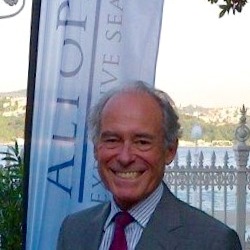
Marking 20 years since its founding in 2006, AltoPartners reflects on its evolution into a global executive search partnership built on trust, local insight, and cross-border collaboration. In this perspective, Jean-Philippe Saint-Geours reflects on AltoPartners’ evolution during the global financial crisis, sharing how the partnership strengthened its international executive search capabilities, expanded into key global markets, and built a collaborative model based on trust, local expertise and cross-border leadership advisory.
I took the baton of Global Chairman from Albert Froom in June 2009, and when I became Global Chairman, the situation was uncertain.
The global financial crisis was at its peak following the collapse of Lehman Brothers. Like many organisations, we had to ask ourselves a difficult question: should we continue as we were – or rethink everything?
We chose to continue, but in a different way. We became leaner, more disciplined, and more focused on what really mattered.
It was a demanding period, but also one of the most rewarding of my career, because we succeeded in the turnaround.
In that period, I had two priorities.
The first was to strengthen the partnership from within by developing and consolidating our assets: people, diversity, efficient governance, our information system, geographic coverage, amongst others.
We worked to clarify how we operated by putting in place a proper charter, defining what makes a strong partner, and establishing clear principles for working together across borders. We also created a more structured way of managing the organisation, with shared responsibilities rather than central control. This was possible thanks to a very active and dedicated Global Operating Committee. This groundwork laid the foundation for us to then hire our first employee in 2014, Julia Scheffer, who succeeded tremendously well in modernising our image and developing our marketing tools internally and externally.
We also began to invest more seriously in our infrastructure, driven by Jakub Cerny and supported by Jana Martinova in Prague.
We improved our technology platforms to better share information across countries, and we worked on building a stronger and more consistent brand. I still remember the long discussions about our visual identity – even debating between images of “birds” and “mountains” before finally agreeing on the direction of mountains to demonstrate “altitude” and at the time, our logo was blue and grey. Importantly, we made a conscious choice about what AltoPartners should be.
Not a “network”, but a true partnership of equals – an alliance. Each partner with one voice. No hierarchy, no dominant firm. At the time, I often thought of it as something closer to NATO than to a traditional corporate structure.
This was essential when we were actively “selling” our alliance to attract potential new member firms.
The second priority was to expand our global presence.
While we had some international bricks in place, we knew that if we truly wanted to be credible internationally, we needed to be present in the right markets.
Securing the United States was essential. It was a long and sometimes difficult journey, but bringing Diversified Search into the partnership was a decisive step forward. I am proud that as they were there during our time of growth, we have been there with them through their impressive evolution and dominance in the US market.
At the same time, we expanded into emerging markets such as South Africa, Türkiye and parts of Asia Pacific. I remember travelling several times to Johannesburg or Istanbul to find the right partner while discovering the specialties of governance in these marketplaces. Also a very intense trip to Shanghai with Ian and Sonal, where we had to rethink and complete our China partnership in three days. These were not simple decisions, but they shaped the future of AltoPartners.
Despite the crisis, this period became one of the most active for cross-border work. It was at a time of peak globalisation, particularly in the industrial sectors. Our alliance acted as a kind of shock absorber – when one market slowed, another was growing. There was particularly strong collaboration between Eastern and Western Europe in this business model development.
But beyond all of this, what made the difference was the people.
This was never a one-man role. It was a collective effort.
I would especially like to thank Sonal Agrawal, Jana Martinova, Corinne Klajda and other members of our Global Operating Committee, whose precision, energy and commitment were essential during those years. What we achieved was the result of true teamwork.
As I look at AltoPartners today, my belief is that the same principles still apply.
We must continue to learn from each other and collaborate more actively across countries and practices. We must stay curious about what others are doing and how our profession is evolving. Technology will continue to challenge us, as it already did with the rise of the internet and LinkedIn. And now with AI, the same questions apply. How do we continue to add value to our clients? What is our differentiation?
But I do not believe that technology will replace what we do best.
It will replace simple, transactional work. It will not replace judgement, relationships, or the understanding of people and cultures. That remains our responsibility.
I am proud to have been part of this journey.