The Director’s Dilemma – March 2026 Edition

Produced by Julie Garland-McLellan, Consultant at AltoPartners Australia and non-executive director and board consultant based in Sydney, Australia.
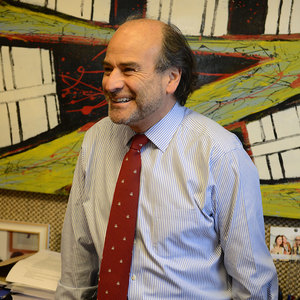
Contribution by Mario Mora, Founder & Senior Partner of Equation Partners / AltoPartners Chile. Mario was a board member of the Chilean Banking Association (2000-2002) and the Corporación Educacional Santo Tomás (2004-2008) and was the LATAM representative on the AltoPartners Operating Committee. Mario speaks both Spanish and English fluently and holds a bachelor’s degree in business administration from the Universidad de Chile. He is based in Santiago, Chile.
This edition of the newsletter was first published on The Director’s Dilemma website and the full newsletter is available for viewing here To subscribe to future editions of the newsletter, click here
The Director’s Dilemma - March 2026
This month our real-life board dilemma concerns a conflict of interest that is shared by all members of a board committee. I hope you will enjoy the sample responses and consider how you might choose to approach a similar issue.
Graeme chairs the Professional Standards Committee for the board of his Professional Association. The board started remunerating directors two years ago. The fees are a pittance compared to the workload and responsibility, but it is a token that is appreciated by the directors. A member has now written to Graeme, asking if it is good governance for the Chair of a board to also chair the people and remuneration committee when the people and remuneration committee determines the fees for board members. Graeme was about to respond confidently that it is standard practice for chairs to also chair the remuneration and nominations committee because they are the leader of the board and have most interest in ensuring appropriate composition, skills, and culture. But then he started to think about the principle that nobody should determine their own remuneration and wondered if that was still right. The constitution states that members of the board should not act if they have a conflict of interest. It then goes on to specifically exclude conflicts of interest that all directors share, such as their membership of the association. The committee is composed entirely of directors who are also association members, but Graeme is wondering if that is a ‘good enough excuse’ rather than ‘good enough governance’.
How would you advise him to respond?
Mario’s Answer
I think Graeme should avoid framing this as “standard practice” and instead anchor his response in governance principles.
In Chile, under local regulations, the core principle is clear, directors should not participate in decisions that directly determine their own remuneration. Even where legally permissible, perception risk can erode trust, particularly in professional associations where legitimacy is reputational.
It is true that in many listed companies the Board Chair sits on, and sometimes chairs, the nominations and remuneration committee. However, best practice usually introduces safeguards. For example, in most Chilean publicly listed companies, the Chair recuses himself when the committee discusses the Chair’s own fees, and the final recommendation is approved by independent directors or the full board without his vote.
In this case, the argument that “all directors share the same conflict” is legally defensible but governance wise insufficient. The question is not only actual conflict, but perceived conflict. In membership organizations, that distinction matters greatly.
My advice to Graeme would be:
-
Acknowledge that the question is legitimate and aligned with good governance.
-
Clarify that while it is common for Chairs to lead nominations and remuneration, they should not participate in determining their own compensation.
-
Propose a safeguard going forward, for example, delegating the discussion on director fees to an independent committee member, with the Chair formally recusing himself from that item and abstaining from the vote.
-
If appropriate, consider member ratification of director fees.
By responding with openness and strengthening the process, Graeme protects both himself and the institution. In governance, perception managed well is credibility earned.
Julie’s Answer
It is easy to do what ‘everybody’ does whilst ignoring inconvenient principles; Graeme should thank the Member who raised the concern, as this will help him achieve better practice.
It is common for a Board Chair to chair the Nominations and Remuneration Committee; there is no need to abandon that practice. Graeme should check his board’s conflict of interest policy and the disclosures that have been made. He should also ensure that he is familiar with constitution and the rules around director nomination and remuneration.
For most meetings of the Board, and the Nominations and Remuneration Committee, a simple declaration of interests should suffice to ensure directors are mindful of their conflicts and how these might be perceived by the members of the association.
An independent skills-based appointment to the board or committee can help to bring a different perspective on how other boards, outside of this profession, handle such issues.
For the meeting at which the Board considers its own remuneration, the committee members should ensure that they have expert outside advice on the reasonable ranges of director fees and current market conditions. They may wish to bring in an independent chair to facilitate the discussion of remuneration, or to chair the whole meeting. Or they may choose to simply use the Chair they elected and note that the Chair is conflicted as are they all.
Transparency is important. The Board should report annually on the total quantum of remuneration for the directors and how this is applied across the board members, for example:
– do committee chairs receive additional remuneration?
– does the Chair receive more than the other directors?
– etc.
They should also make available an extract from the independent expert’s advice on reasonable remuneration each year, or each time remuneration is adjusted, and ask the expert to attend the AGM and respond to questions from the members if there are any.